
Is it a good idea for governments to be investing massively in data centers?
Our answer is yes. Computing is becoming as fundamental as electricity, but public money carries a duty private money does not: it must not leave citizens worse off.
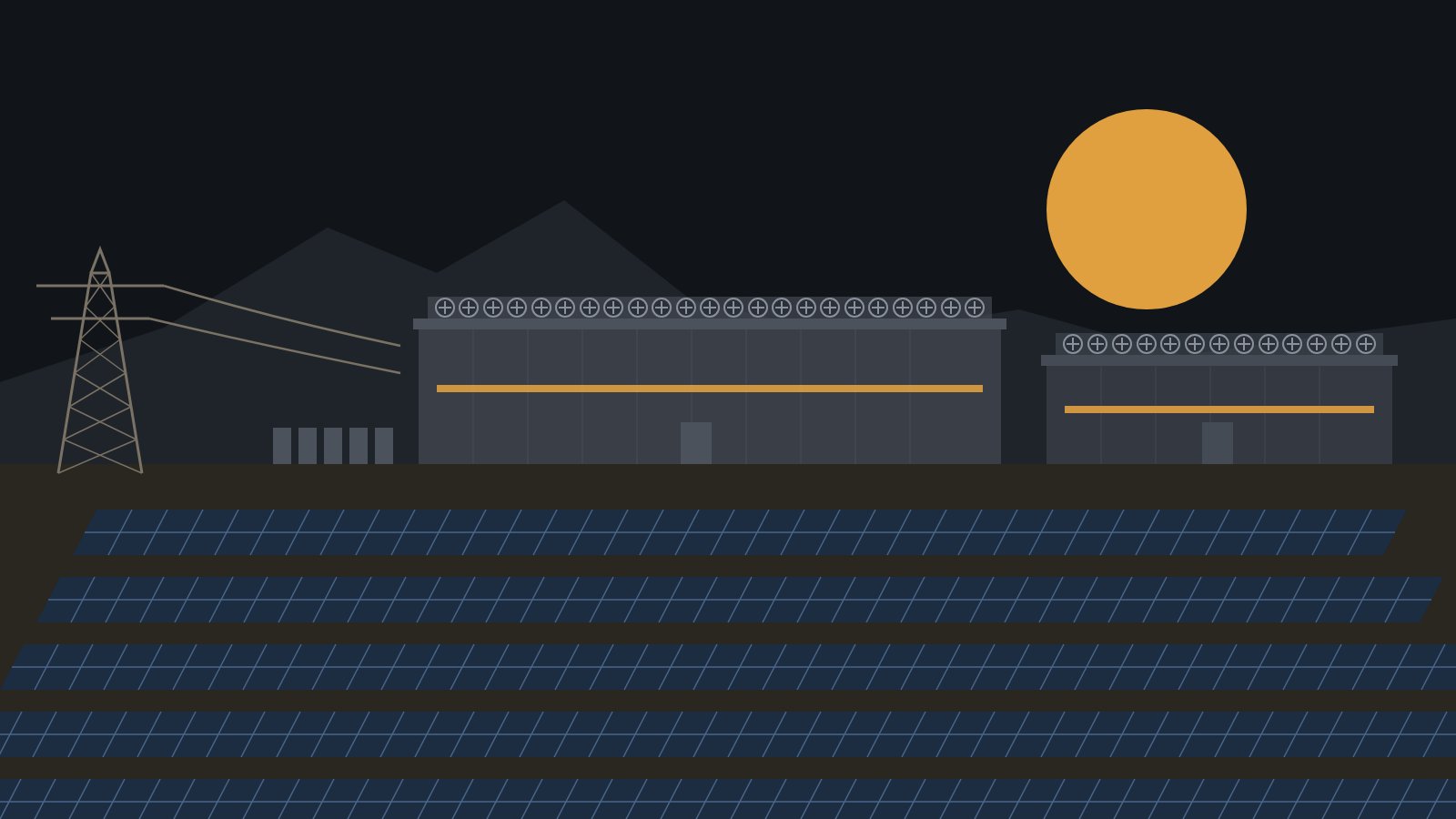
Computing is becoming national infrastructure
Artificial intelligence runs on computing power, and computing power runs in data centres. The four largest US cloud providers alone are expected to spend around $725 billion on capital investment in 2026. A country without its own capacity will increasingly depend on a small number of foreign companies for services that its government, businesses and universities cannot do without.
Governments have noticed. Saudi Arabia has created Humain, owned by the Public Investment Fund, with a target of about 6 gigawatts of data centre capacity by 2034 and an interim goal of 1.9 gigawatts by 2030. The European Union has committed up to €10 billion of public money to as many as seven "AI gigafactories", designed to attract at least €20 billion more from private investors. India's IndiaAI Mission subsidises access to computing for start-ups and researchers, and by mid-2026 had made more than 38,000 GPUs available through private providers.
The tools differ, but the conclusion is the same: computing is too important to be left entirely to the market. We agree. The real question is not whether governments should invest, but how they can do so without causing harm.
The case for public investment
The case is strong, and it rests on four points.
First, markets will not build the foundations on their own. A large data centre campus can draw as much electricity as a city, and it needs power plants, transmission lines, substations, fibre and land that take years to plan and benefit many users at once. Arizona shows what happens when this ground is not ready. The Phoenix area's largest utility has said that if every data centre that wanted to connect were able to do so, its
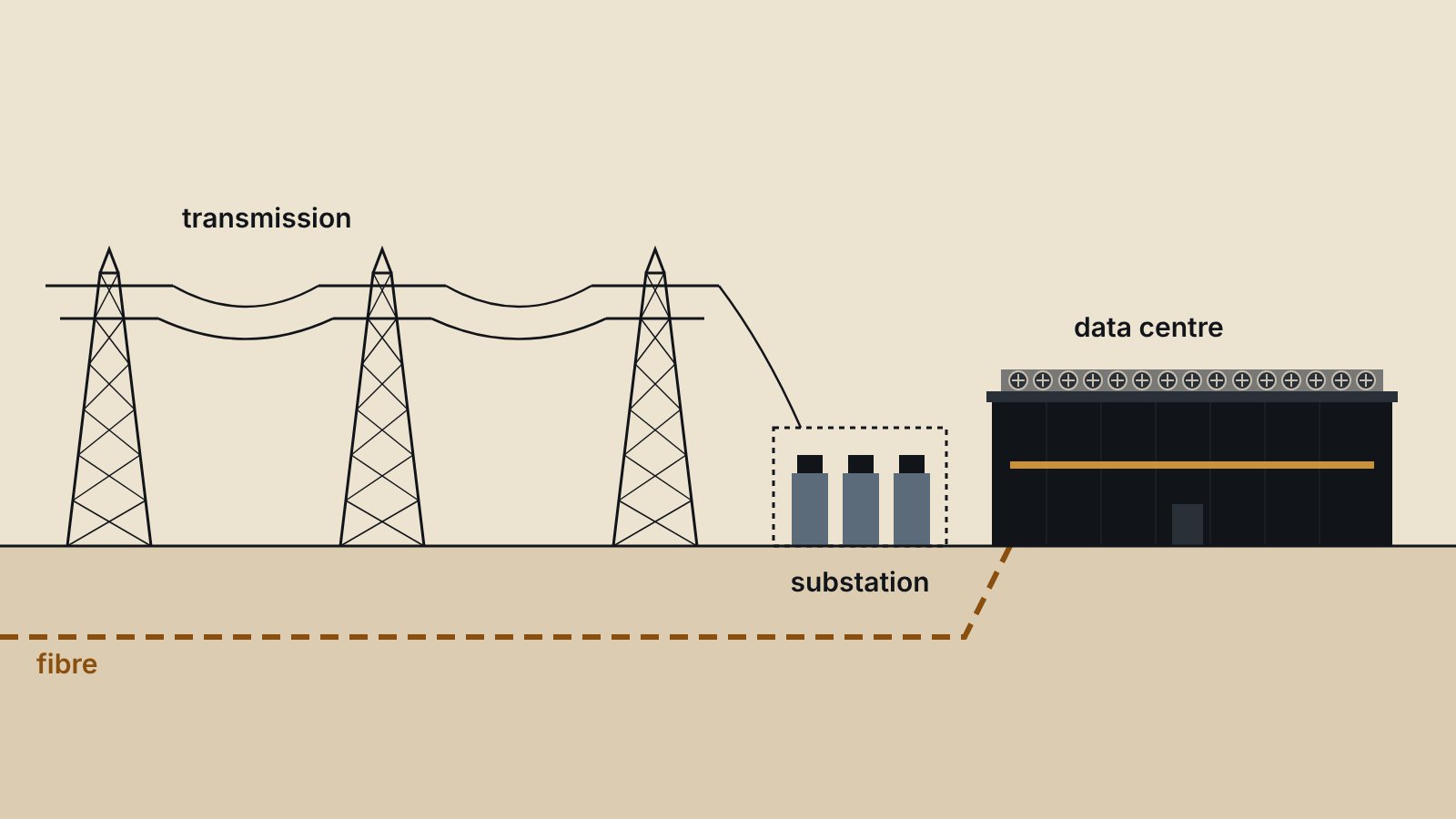
peak demand would rise from a record 8.2 gigawatts to about 19 gigawatts. A state
regulator observed that a grid built over a century would need to double within four to five years. That is public infrastructure work, and only governments can lead it.
Second, access matters. Universities, start-ups and public bodies often cannot afford commercial computing prices, and a country whose researchers cannot experiment will not build its own AI capability. India's subsidised access has brought prices well below international cloud rates, putting serious computing within reach of people who were previously priced out.
Third, sovereignty is a legitimate concern. Governments hold sensitive data on health, security and citizens, and it is reasonable for them to want it processed on infrastructure they control. Saudi Arabia's draft Global AI Hub Law goes further, proposing "data embassies" in which foreign governments and companies could host data in the kingdom under their own legal jurisdiction, turning sovereignty into a service other countries can buy.
Fourth, some countries have a genuine natural advantage. Saudi Arabia has repeatedly set world records for cheap solar power: the Shuaibah project was contracted at about 1.04 US cents per kilowatt-hour and the Najran plant at roughly 1.1 cents. Electricity is a data centre's largest running cost. For an energy-rich country, turning sunlight into computing may be worth far more than exporting the energy itself, and owning capacity brings
bargaining power: the US approval in November 2025 allowing Humain to buy the
equivalent of up to 35,000 Nvidia GB300-class systems, and partnerships with global investors, followed directly from the scale of Saudi ambition.
Where investment can cause harm
None of this means every pound, euro or riyal spent on data centres is well spent. Public investment can harm citizens in five ways.
The first is to public finances . AI chips are overtaken by newer generations within three to five years, so a data centre must be re-equipped several times over its life. Alvarez & Marsal estimates that delivering even half of Saudi Arabia's announced capacity would need up to $42 billion in project capital by 2030, around $32 billion of it debt. Some analysts warn that server utilisation in parts of the region runs as low as 12 to 18 per cent. Debt taken on for assets that lose value before they are paid off is a burden on future taxpayers.
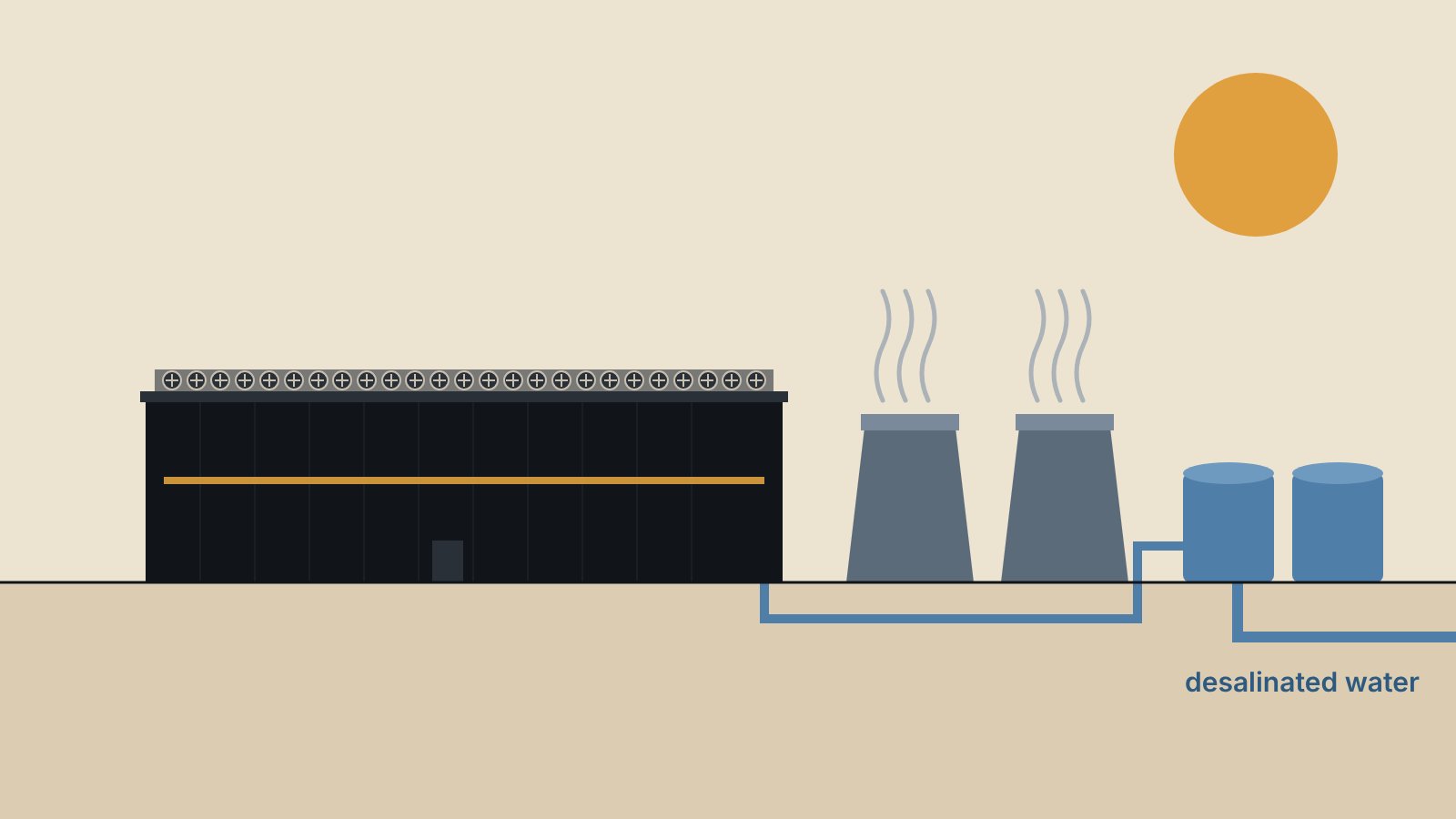
The second is to water . Cooling is the hidden cost of computing in hot countries. Older air-cooled data centres in the Gulf use around 80 per cent more electricity than the servers themselves, and the cheapest way to reduce that, evaporative cooling, consumes large volumes of water. In much of the Gulf that means energy-intensive desalinated water. In Chile, Google's proposed $200 million data centre in Cerrillos would have drawn an estimated 7.6 million litres of drinking water a day from a drought-stricken aquifer, until local opposition and an environmental court forced a redesign around air cooling.
The third is to household bills . If data centres pay less than the full cost of the power and grid expansion they require, ordinary consumers make up the difference. Arizona has paused certain data centre tax incentives for three years, and its attorney general has called for a pause on new approvals, citing rising power bills.
The fourth is broken promises on jobs . Data centres employ many people during construction and very few afterwards. Meta's $1 billion facility in Kansas City created roughly 1,500 construction jobs but only about 100 permanent ones. In Chile, permit filings showed far fewer onsite jobs than the companies' public claims. When governments justify investment with employment figures that never materialise, they lose public trust.
The fifth is security and dependence . In March 2026, during the war with Iran, drones struck Amazon facilities in Bahrain and the UAE. Only three of the Gulf's 233 data centres were affected and services were rerouted, but data centres are now plainly strategic targets. Connectivity is exposed too: in September 2025, cuts to undersea cables near Jeddah slowed internet traffic across the Gulf and South Asia. And the most important input, advanced chips, depends on export licences that another government can widen or withdraw.
These are not reasons to stop investing. They are reasons to invest carefully.
Choosing the right tool
Governments have three broad tools, and each suits a different purpose.
The state as owner , as in Saudi Arabia, offers control, speed and bargaining power. It is the right tool for a sovereign core of capacity that handles sensitive government data, and for a country with a real cost advantage it can build a new export industry. Its risk is concentration: if the state carries all of the commercial risk alone, a downturn in AI demand lands directly on public finances. Sharing that risk through co-investment with private partners, as Humain has begun to do with infrastructure funds and global investors, reduces it.
The state as anchor customer , as in the European Union, uses public money as a guaranteed buyer so that private consortia build and run the facilities. It limits public exposure, but it is slow: the programme has been scaled back, and the first facilities are now expected around mid-2028.
The state as buyer of access , as in India, contracts private providers and subsidises usage. Its contracts even require providers to add capacity if prices fall, so the public benefits from cheaper hardware rather than being stuck with obsolete equipment. Its
weakness is distribution: an analysis by ThePrint found that nine model builders received
about 1,058 crore of the compute subsidy while researchers received around 10 crore.
The best strategies combine all three: own a strategic core, partner with private capital for commercial scale, and buy access on behalf of researchers and start-ups.
A "do no harm" test
Before committing public money to a data centre project, governments should be able to answer yes to five questions.
Would it survive a fall in AI prices? If the price of computing halved, would the project still repay its debt? Is commercial risk shared with private partners, rather than carried by the treasury alone?
Does it protect water? New facilities should not use drinking water for cooling, should favour closed-loop or air-based systems, and should report their water use alongside their energy efficiency.
Does it pay its own way on power? Operators should pay the full cost of the electricity and grid expansion they use, so that households are not subsidising data centres through their bills.
Does it benefit citizens directly? Licences and land grants should carry binding commitments: training and hiring nationals in skilled roles, and a reserved share of capacity for national universities and start-ups.
Is it resilient? Power supply, fibre routes and physical security should be planned in advance, with diverse cable routes and backup capacity, so that a single attack or cable cut cannot take services down.
A project that passes this test deserves strong public support. A project that fails it should be redesigned, not abandoned.
Who should gain
The test matters because it decides who benefits. Done carelessly, public investment in computing sends most of the gains to chipmakers and foreign cloud companies, while taxpayers carry the debt, households pay higher bills and communities give up scarce water. Done well, the same investment builds a stronger grid that serves every industry, gives researchers and start-ups affordable access to the tools of the AI era, creates skilled jobs for nationals, and turns a country's natural advantages into lasting economic strength.
Conclusion
Is it a good idea for governments to invest massively in data centres? Yes. Computing is to this century what power stations were to the last, and countries that build it will shape the AI era rather than simply consume it. The scale of investment is not the problem. Harm is. Governments should build boldly, and measure success not in gigawatts installed but in whether their citizens are better off.
Sources
- Humain capacity targets (Crypto Briefing)
- Humain financing and plans (Folio3, Jan 2026)
- Humain MIS deal; Alvarez & Marsal estimate (AGBI, Aug 2026)
- US approves chip exports to Humain (Middle East AI News)
- Saudi record solar tariffs (Saudi Gulf Projects)
- Saudi draft Global AI Hub Law (CMS)
- EU AI gigafactories call (StorageNewsletter, Aug 2026)
- Hyperscaler capex comparison (The Good Lobby)
- IndiaAI GPU subsidies and capacity (CareerIndia, 2026)
- IndiaAI price-drop clause (CXO Digital Pulse)
- IndiaAI compute subsidy distribution (ThePrint, Oct 2026)
- Gulf AI infrastructure: business and economic case (Gulf International Forum, Mar 2026)
- Data centers under fire (Semafor, Apr 2026)
- Red Sea cable cuts near Jeddah (Business Today)
- Data centre cooling in extreme heat (Moduledge, Aug 2026)
- Arizona's grid and data centres (Axios Phoenix, Jun 2026)
- Arizona AG calls for data centre pause (Bisnow)
- Phoenix grid demand (InvestigateTV)
- Chile's Google ruling and water use (Developing Telecoms)
- Data centre job claims vs permits in Chile (Rest of World)